
Military Money Secrets: Wealth Moves at Fort Hood
Military Money Secrets, Fort Hood Soldier Finances
Military Money Secrets: 10 Wealth-Building Moves Smart Fort Hood Soldiers Make That Nobody Talks About
The military quietly hands you everything you need to retire wealthy. Most soldiers never see it, never use it, and leave six figures on the table. This is the playbook the rich soldiers at Fort Hood follow while everyone else complains about pay.

The Truth About Military Wealth at Fort Hood
I’m Denise Brooks Robertson, writing for The Killeen Insider. I’ve watched soldiers at Fort Hood finish a 20-year career with nothing but a DD-214 and back pain. I’ve also watched E-4s and young lieutenants quietly stack six figures before their ETS date. Same pay tables. Same BAH. Same deployments. Completely different money outcomes.
The difference is not luck. It’s ten specific moves they start early and repeat. This is practical, no-fluff financial intelligence for active duty soldiers and spouses at Fort Hood who are done being broke and ready to build real wealth. Use this as your unofficial in-processing brief for military wealth building at Fort Hood.
1. Max Out Your TSP — Especially the Roth TSP
The Thrift Savings Plan (TSP) is the most powerful wealth tool you have in uniform. In 2026, you can contribute up to $24,500 of your own money into TSP (Traditional or Roth). That’s before any government matching under the Blended Retirement System (BRS). Older service members can contribute even more with catch-up contributions, but most E-4 through O-3 are nowhere near hitting the basic limit.
The Roth TSP is the hidden gem. You contribute after-tax dollars now, the money grows tax-free, and you withdraw it tax-free in retirement if you follow the rules. For a young soldier in a relatively low tax bracket, that’s a huge long-term win. You’ll never again have a guaranteed pension plus access to an ultra-low-cost investment plan like this on active duty.
Action step this week: Log into MyPay, set your TSP contribution to at least 10–15% of basic pay, and choose Roth as the source. If you’re under BRS, make sure you’re contributing at least 5% so you don’t miss free matching money. Then set a calendar reminder every six months to bump that percentage by 1–2% until you’re pushing toward the annual limit. This is core TSP military investing.
2. Turn Your BAH into a Fort Hood Rental, Not Just Rent
In 2026, BAH for Fort Hood (TX286) ranges roughly from $1,662 for E-1 to E-4 with dependents up to over $2,300 for O-3 with dependents. That’s tax-free money hitting your LES every month. You can either hand it to a landlord, or you can use it to buy an asset that pays you long after you PCS.
The smart move many quiet millionaires at Fort Hood make is this: buy a modest, rentable house while stationed here, live in it, then turn it into a rental when you PCS. Fort Hood’s constant turnover of soldiers, contractors, and traveling professionals creates steady rental demand. Companies like Steel Toe Suites offer furnished short-term housing for TDY, travel nurses, and visiting families — proof there’s strong demand for well-managed rentals in the Killeen–Harker Heights–Copperas Cove area.

A single Fort Hood tour can set up a long-term rental that pays you for decades.
Action step this week: Pull your BAH rate by rank, talk to a local lender, and run numbers on a starter home where the mortgage (principal, interest, taxes, insurance) fits comfortably under your BAH. Ask the lender to show you what the payment would look like and what realistic rent would be when you PCS. Study existing furnished rentals like those at Steel Toe Suites to understand what the market is willing to pay for quality housing near post.
3. Use the Savings Deposit Program (SDP) During Deployments
When you deploy to a designated combat zone, you may be eligible for the Savings Deposit Program (SDP). It lets you deposit up to a certain limit while deployed and earn a guaranteed 10% annual interest. That’s not a typo. Ten percent, guaranteed, backed by the U.S. government. You will not find that rate in any normal savings account.
If you deploy and don’t use SDP, you’re volunteering to make less money on cash you could easily set aside. Even a few thousand dollars parked there for a deployment cycle can give you a serious boost toward your emergency fund or down payment savings.
Action step this week: If you’re already on orders or in a unit that deploys, talk to your finance office or S1 about SDP eligibility and how to start contributions as soon as you hit the combat zone. Set a target amount — for example, “I’ll put $300 per month of deployment pay into SDP” — and automate it.
4. Use SCRA to Slash Interest Rates on Existing Debt
The Servicemembers Civil Relief Act (SCRA) is one of the most underrated tools for fixing your finances. Under SCRA, certain debts you took out before entering active duty can have their interest rates capped at 6% while you’re in service. That includes credit cards, car loans, and some other consumer debts. Some lenders even go beyond the legal requirement and reduce rates further for active duty.
If you’re paying 18–25% on old credit card debt, SCRA is the difference between drowning and finally making progress. Less interest means more of your payment hits the principal and your balance drops faster — freeing up cash for real wealth-building.
Action step this week: Make a list of every loan and credit card you opened before you joined. Call each lender, say you’re on active duty, and ask about their SCRA benefits. Follow their process (often a simple upload of your orders) and confirm in writing when the rate reduction hits. Then redirect the interest savings straight into debt payoff or your emergency fund.
5. Build a 6-Month Emergency Fund Before You Chase Investments
Wealthy soldiers don’t build on quicksand. Before they chase real estate deals, crypto tips, or day-trading, they stack a 6-month emergency fund. That means 3–6 months of your bare-bones living expenses sitting in cash or a high-yield savings account — boring, safe, and ready when life hits you sideways: car repairs, emergency travel, sudden PCS costs, spouse job loss.
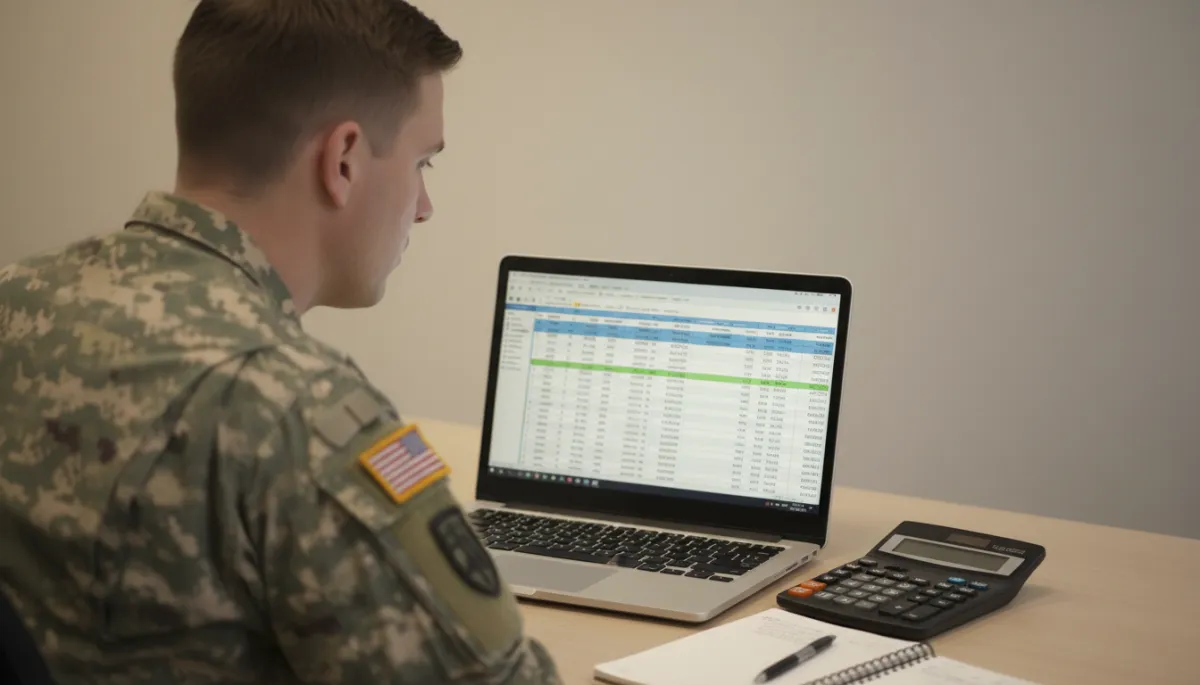
A solid emergency fund keeps you from swiping high-interest credit cards when life gets messy.
Action step this week: Add up your monthly essentials: rent or mortgage, utilities, food, gas, insurance, minimum debt payments. Multiply by three. That’s your first emergency fund target. Open a separate savings account and set up an automatic transfer every payday — even if it’s just $50–$100 to start. Increase the amount every time you get a raise, promotion, or tax refund until you hit 3–6 months of expenses.
6. Use Your VA Loan as a Portfolio Tool, Not a One-Time Event
Most people think of the VA loan as a one-and-done “buy your forever home” benefit. Smart Fort Hood soldiers treat it as a portfolio weapon. A VA loan lets you buy with no down payment, often with competitive interest rates and no private mortgage insurance. Used correctly, that can be the foundation of a small real estate empire built over multiple PCS moves.
Example: You use a VA loan at Fort Hood to buy a solid starter home. You live in it, pay down the mortgage, then PCS and convert it to a rental. Later, depending on your remaining VA entitlement and local lender rules, you may be able to use your VA benefit again at the next duty station. Over a 10–15 year career, that can mean several properties, all started with minimal money down thanks to your service.
Action step this week: Schedule a meeting with a lender who regularly works with VA loan Fort Hood buyers and ask them to walk you through how VA entitlement works, how it can be reused, and what price range keeps your payment under your BAH. Your goal isn’t to impress your unit — it’s to own assets that can rent easily if you move.
7. Invest in Low-Cost Index Funds Beyond TSP
TSP is powerful, but the soldiers who really build wealth don’t stop there. They open a separate brokerage account (with a reputable firm) and invest in low-cost index funds — simple baskets of hundreds of companies that track the market. No stock picking. No day trading. Just steady, automatic investing every month for 10–20 years.
A basic strategy: put a set amount every month into a total U.S. stock market index fund or S&P 500 index fund. Over time, with compound growth, this becomes another six-figure pillar alongside your TSP and real estate. This is the quiet formula behind many “how does that staff sergeant have so much money?” stories.
Action step this week: Open a brokerage account in your name or jointly with your spouse. Set up an automatic monthly investment — even $100 — into a broad, low-cost index fund. Commit to leaving it alone for at least five years. This is one of the simplest soldier financial tips that actually works.
8. Start a Side Hustle or Spouse Business at Fort Hood
One of the biggest untapped opportunities for Fort Hood soldier finances is small business ownership. That might be a spouse-run business (childcare, cleaning, photography, online services) or a soldier’s side hustle that fits around duty hours and doesn’t violate regulations. Beyond extra income, a business opens up tax advantages — legitimate deductions for business expenses, home office, equipment, and more, when done correctly and within IRS rules.

A well-run side business can add income, tax benefits, and post-military options.
Over a few years, a modest side business can pay off debt, fund investments, and even become your full-time work after the Army. It also gives spouses more control over their earning power despite frequent PCS moves.
Action step this week: Sit down with your spouse and list three skills or services you could offer locally or online. Research basic business registration in Texas and, if needed, talk to a tax professional who understands small businesses and military families. Platforms like Mobilized Soldiers provide guidance and resources to help military families think through side income, taxes, and long-term wealth-building around Fort Hood.
9. Network with Veteran Entrepreneurs and Investors in Killeen
Around Fort Hood, there are veterans who quietly left the Army and built serious businesses and real estate portfolios. They own local companies, rental properties, and franchises. Many are willing to share what they know — but you have to step out of the barracks bubble and meet them.
When you connect with these people, you pick up real-world advice you’ll never get in a mandatory briefing: how they used BAH to buy their first property, how they structured their businesses, what mistakes they made with money on active duty, and how they protect their families now.
Action step this week: Look up local veteran business groups, real estate meetups, or entrepreneurship events in Killeen, Harker Heights, and Copperas Cove. Show up once a month. Ask questions, listen more than you talk, and follow up with the people who are clearly a few steps ahead of you financially. Resources like Mobilized Soldiers often highlight events, experts, and tools specifically for military families navigating money decisions at Fort Hood.
10. Use BRS Continuation Pay Like the Rare Bonus It Is
Under the Blended Retirement System (BRS), many soldiers become eligible for continuation pay around 8–12 years of service. It’s a one-time, mid-career bonus in exchange for agreeing to serve additional years. The exact amount depends on your service and policies at the time, but it can equal several months of basic pay — a serious chunk of money if you treat it right.
This is not “new TV and truck” money. Used well, continuation pay can wipe out high-interest debt, fully fund your emergency reserve, or jump-start investments that compound for decades. Treat it like a rare power-up in your financial game, not a weekend splurge.
Action step this week: If you’re anywhere near the 8–12 year window, talk to your career counselor and finance office about when you’ll be eligible and how much continuation pay might be. Decide now — before emotions get involved — what percentage will go to debt, savings, and investing. Put that plan in writing and share it with your spouse so you’re on the same page when the money arrives.
Put It All Together: Your Fort Hood Wealth Blueprint
None of these moves are complicated. What makes them powerful is doing them together and starting now:
- TSP and Roth TSP for long-term, tax-advantaged investing.
- BAH and VA loan turned into real estate, not just rent checks.
- SDP, SCRA, and a real emergency fund to stabilize your base.
- Index funds, side businesses, and veteran networks to grow beyond the paycheck.
- BRS continuation pay deployed as a strategic weapon, not a shopping spree.
The soldiers who retire wealthy from Fort Hood aren’t necessarily the ones with the highest rank or the biggest bonuses. They’re the ones who quietly execute these moves month after month while everyone else complains about how “you can’t get ahead on military pay.”
Don’t Leave Another Month of Money on the Table
Every month you delay is another month of:
- TSP matching you didn’t get.
- BAH going to your landlord instead of your equity.
- High-interest debt you didn’t cut with SCRA.
- Index funds and side income you didn’t start.
You don’t need to fix everything this week. But you do need to start something this week. Pick one of the ten moves — TSP, SCRA calls, emergency fund setup, talking to a VA lender, researching Steel Toe Suites–style rentals, or opening a brokerage account — and execute. Then stack the next move on top of it next month, and the next after that.
If you and your spouse want help cutting through the noise, Mobilized Soldiers is built specifically for military families navigating financial decisions at Fort Hood — from understanding your LES to planning for PCS, deployment, and life after the Army. Use tools like that, plus the strategies in this guide, and you’ll be far ahead of most of your peers before you ever sign out on final leave.
The military has already given you the tools. Now it’s on you to use them. Don’t wait for the next promotion or the next duty station. Your wealth-building story at Fort Hood starts this month, with the paycheck you already have.
