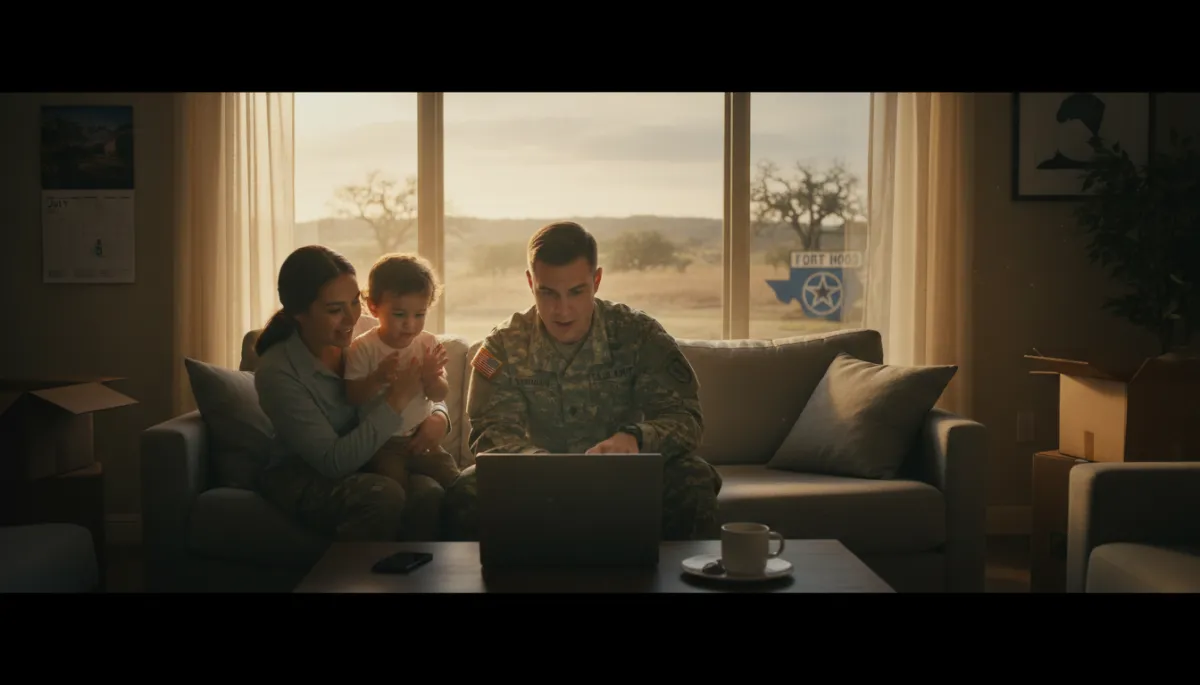
Fort Hood PCS Guide: Money & Housing Tips
Military PCS, Fort Hood, Killeen Texas, Money & Housing
Military Money Secrets: The Ultimate Fort Hood PCS Survival Guide Nobody Actually Gives You
A warm, no-fluff PCS to Fort Hood Texas guide packed with real-life money tips, housing intel, and sanity-saving resources for soldiers, spouses, and military families moving to Killeen and the surrounding area.

The Moment the Orders Drop: Excitement, Panic, and “Where Even Is Killeen?”
The email hits, or the commander calls you in. You already know what’s coming before the words are out of their mouth: PCS orders to Fort Hood, Texas (yes, now officially Fort Cavazos, but everyone still says Fort Hood when they’re searching for a PCS to Fort Hood Texas guide at 2 a.m.).
You walk through the door that night with that envelope look on your face. Your spouse reads “Killeen, TX” and does the quick mental math: new schools, new doctors, new job hunt, new everything. The kids are half-excited, half-devastated. The dog just wants to know if the backyard will still have squirrels. And you? You’re already wondering: Will our BAH cover a decent place? Where should we live? How broke are we about to be?
Here’s what nobody actually sits you down and explains: Fort Hood can be one of the easiest places to get ahead financially—or one of the easiest to quietly bleed money. The difference is not rank, it’s intel. The kind you usually only get from that one senior spouse who’s been here three times and isn’t afraid to tell you the truth.
Section 1 – Fort Hood BAH: How to Actually Make Your Housing Allowance Work for You
Let’s start with the big one: money. Your Basic Allowance for Housing (BAH) at Fort Hood—Military Housing Area TX286—is more than just a number. It’s the difference between feeling constantly squeezed and actually using this PCS to get ahead. For 2026, Fort Hood BAH rates are surprisingly decent compared to the local cost of living, which runs about 16% below the U.S. average (per Military OneSource’s installation overview). That means you have room to play it smart.
What Your 2026 Fort Hood BAH Really Looks Like
| Pay Grade | With Dependents (Monthly) | Without Dependents (Monthly) |
|---|---|---|
| E‑1 to E‑4 | $1,662 | $1,374 |
| E‑5 | $1,695 | $1,530 |
| E‑6 | $1,920 | $1,626 |
| E‑7 | $2,070 | $1,668 |
(Higher enlisted, warrant officers, and officers see even bigger numbers—up into the $2,700+ range with dependents, per 2026 vetcalc.org and MyBaseGuide data.) The point isn’t to memorize the chart; it’s to understand that your BAH is predictable income in a market where you can often rent or even buy for less than that number—if you choose strategically.
On-Post vs. Off-Post: The Real Math
- On-post housing (like Liberty Village and other privatized options) usually means your entire BAH goes straight to the housing company. You don’t pay separate rent and utilities (beyond overages), but you also don’t pocket any “extra” if you would’ve found something cheaper off-post.
- Off-post housing lets you keep the difference if your rent + average utilities are less than your BAH. That’s where the “money secrets” start to show up.
Example: An E‑5 with dependents in 2026 gets about $1,695/month. If you find a well-located rental for $1,350 and average $200 in utilities, you’re at $1,550 total. That’s $145/month you keep—over a three-year tour, that’s more than $5,000 that can go to savings, debt payoff, or the “we survived another PCS” vacation fund.
How to Maximize BAH at Fort Hood
- Decide your priority first: Is it time (short commute), schools, space, or saving money? You can’t optimize for all four at once, but you can hit two or three really well in the Fort Hood area.
- Cap your rent at 70–80% of BAH. Aim to keep base rent around 70–75% of your BAH, leaving 10–15% for utilities and 10–15% to actually keep. If your BAH is $1,920 (E‑6 with dependents), try to stay in the $1,350–$1,500 rent range if possible.
- Factor in commute costs. A cheaper house 30 minutes away might cost you more in gas, time, and wear-and-tear than a slightly pricier rental closer to post. Your time with your family has a value too, even if DFAS doesn’t calculate it.
- Don’t forget renter’s insurance. It’s cheap (often $15–$25/month) and absolutely worth it in a high-turnover military market.

A one-hour BAH and budget session now can save thousands over your tour.
Section 2 – Neighborhoods Decoded: Where to Actually Live Near Fort Hood
When you start moving to Killeen Texas military groups on Facebook, you’ll see the same questions on repeat: “Is Killeen safe?”, “Harker Heights vs Copperas Cove?”, “How bad is the commute from Temple?” Let’s break it down like someone who’s actually driven these roads in rush hour with a screaming toddler in the backseat.
Killeen Proper: Closest, Cheapest, Most Mixed
- Commute: 5–10 minutes to main gates, depending on which side of town you’re on. You can literally be at PT in under 10 minutes from some neighborhoods.
- Vibe: High military presence, lots of rentals, older homes mixed with newer subdivisions. Great if you want to be close to everything and don’t mind a little chaos.
- Pros: Lowest prices (median around $245K as of mid‑2026), tons of inventory, easiest for single soldiers or families who prioritize commute and cost over schools or “suburban feel.”
- Cons: Very block-by-block. Some corridors like Rancier Avenue or Fort Hood Street are less desirable. Do a drive-by at night and check crime maps before signing anything.
Harker Heights: The “Best Overall” Family Compromise
- Commute: About 10–15 minutes to Fort Hood, depending on gate and traffic. Very doable, even with early PT and late staff duty nights.
- Vibe: Suburban, newer construction, lots of families, better-rated schools than much of Killeen ISD. Often ranked high for commute and family fit in 2026 reports like Garrison Ledger and Niche.
- Pros: Great balance of price, schools, and commute. Neighborhoods like Skipcha Mountain Estates, Knights Ridge, and Country Trails are popular with military families for a reason. Strong resale and rental demand if you buy.
- Cons: Higher buy-in than Killeen, and rentals can go quickly. You’ll likely spend a bit more of your BAH here—but many families feel it’s worth it for schools and community feel.

Many Fort Hood families choose nearby suburbs for a balance of schools and commute.
Copperas Cove: Quieter, More Rural, Budget-Friendly
- Commute: Around 15–20 minutes to Fort Hood. A straight shot for many units, but you’ll want to test drive it at your actual report time once you arrive.
- Vibe: Smaller-town feel, fewer big-box stores, a little quieter. TEA school ratings around a “B,” with smaller class sizes in some areas. Think “we want out of the hustle, but not way out in the country.”
- Pros: Affordable prices (median around $250K), bigger lots in some neighborhoods, and a community that’s used to military families cycling through without feeling like a pure “base town.”
- Cons: Longer drive, fewer amenities than Killeen/Harker Heights, and you’ll plan trips into town for certain shopping and services.
Belton & Nolanville: Schools, Lake Life, and Long-Term Resale
These two are often mentioned in the same breath, because both feed into Belton ISD, which is well-regarded in the area and attractive if you’re thinking ahead to high school and stability.
- Belton – Commute of about 20–25 minutes. Median home price around $335K, newer inventory, and access to Belton Lake for weekends on the water. Great if you can afford a higher mortgage or rent and want to think beyond this one duty station for resale value.
- Nolanville – Commute around 15–20 minutes. Median home price closer to $371K, newer builds, quieter small-town feel, and the same Belton ISD advantage. Inventory can be tighter, but many families love the “just enough” feel—close to I‑14, but not in the middle of everything.
Temple: Longer Drive, Bigger City Feel, Non-Military Economy
- Commute: 25–30 minutes, depending on traffic and gate. This is where podcasts and strong coffee become your new battle buddies.
- Vibe: Larger city with a strong medical and civilian job market thanks to Baylor Scott & White. Less dependent on military cycles, which can be nice for spouse employment and long-term stability.
- Pros: Median home price around $279K, more diverse job options, and a bit of distance from the constant churn of a pure military town. Can be ideal if your spouse works in healthcare or wants a civilian-focused career track.
- Cons: That commute is real. Factor in early report times, late nights, and potential weather issues before committing.
Section 3 – Temporary Housing Planning: Why You Really Need 2–6 Weeks of Cushion
One of the biggest mistakes I see families make with a Fort Hood PCS 2026 is assuming they’ll roll into town, sign a lease in 48 hours, and have their HHG delivered by the weekend. I love that optimism. I also love reality: you should plan for 2–6 weeks of temporary housing, especially in peak PCS season or if you’re picky about schools and neighborhoods (which you’re allowed to be).
On-Post Temporary Lodging: Convenient but Competitive
- IHG Army Hotels (TLF) – This includes options like Holiday Inn Express and Candlewood Suites on post. You’ll find kitchenettes or full kitchens in many rooms, free breakfast, Wi‑Fi, and laundry facilities. It’s ideal if you want to be close to in-processing and don’t want to navigate town right away. But: book early. Summer and major unit moves fill these up fast (per Military OneSource’s Fort Hood temporary housing overview).
- Fisher House – If you or a family member is receiving treatment at Carl R. Darnall Army Medical Center, the Fisher House offers supportive, often low- or no-cost lodging. It’s a blessing in a hard season, but it’s not general PCS lodging—it’s specifically tied to medical needs.
Off-Post Hotels and Extended-Stay Options
The DoD Preferred Commercial Lodging list for the Killeen/Fort Hood area includes chains like Best Western Plus, Candlewood Suites Killeen, Holiday Inn Express & Suites, TownePlace Suites, and others. These are great if you’re only in limbo for a week or so and want something predictable, points-friendly, and easy to book online. Just remember: hotel life adds up fast, even with TLE/TLA helping out.
Furnished Short-Term Rentals: The PCS Sweet Spot

A furnished rental buys you breathing room to house-hunt without panic decisions.
For many families, the best balance of comfort and cost is a furnished short-term rental. You get a kitchen, separate bedrooms, and space for kids and pets to decompress—without signing a long lease before you’ve even driven the neighborhoods in daylight.
- Corporate-style housing providers in the area offer fully furnished apartments and townhomes with flexible month-to-month options. Utilities are usually included up to a cap, which makes budgeting easier while you’re still tracking down your HHG and figuring out your permanent address.
- Short-term rentals specifically aimed at military families—like Steel Toe Suites (steeltoesuites.com)—can be a lifesaver. They understand PCS chaos, last-minute date shifts, kids, pets, and the fact that you might be juggling in-processing, house hunting, and Zoom school all at once. Having a space that’s set up for that reality (instead of a tiny hotel room) can seriously lower everyone’s stress level.
Section 4 – Your First 72 Hours at Fort Hood: A Realistic Checklist
Those first three days can feel like trying to drink from a fire hose while jet-lagged, under-caffeinated, and living out of a suitcase. Here’s a practical, not-overwhelming checklist to keep you focused on what actually matters in the first 72 hours of your PCS to Fort Hood Texas guide experience.
Day 1: Touchdown and Triage
- Check in with your unit or reception. Follow your orders for in-processing location and report times. Keep multiple printed copies of orders, marriage and birth certificates, and any EFMP documentation in a single folder or binder you can grab quickly.
- Confirm lodging details. Double-check your temporary housing reservations and TLE/TLA eligibility. If something fell through in transit (it happens), head straight to the Housing Services Office or IHG front desk for help finding a backup plan.
- Do a quick recon drive. If you’re not totally wiped, drive by the main gates, commissary, PX, and at least one neighborhood you’ve been eyeing. Seeing it in real life helps your brain start to map the area and calms some of the unknowns.
Day 2: Paperwork and Essential Services
- In-processing appointments. Knock out as many as possible: finance, S‑1, medical, CIF if required. Ask explicitly about PCS-related entitlements (more on that in Section 5) so you know what reimbursements and advances you’re eligible for.
- Start utilities setup for your future home. Once you have an address, call or set up accounts online for electricity, water, gas (if applicable), trash, and internet. Some providers can schedule turn-on dates in advance, so you’re not showering by phone flashlight your first night in the new place.
- Locate essential shopping. Find your nearest grocery store, pharmacy, urgent care, and gas station. Even if you’re a “we’ll figure it out later” type, your 3 a.m. self with a sick kid will be grateful you know where the 24-hour pharmacy is.
Day 3: Schools, Doctors, and Sanity
- School enrollment. Once you’ve decided on a neighborhood (or at least a likely district), start school enrollment. You’ll typically need shot records, proof of residency (lease or orders), birth certificate, and sometimes previous school records. Many districts around Fort Hood—Killeen ISD, Copperas Cove ISD, Belton ISD, etc.—have online pre-enrollment to speed things up.
- Find doctors and update TRICARE. Change your TRICARE Prime location, select or confirm a PCM at Carl R. Darnall or an in-network clinic, and get referrals started if you have ongoing specialty care or EFMP needs. If you have civilian providers you love, ask for copies of records before leaving your old duty station so you’re not starting from zero.
- Do a mental health check-in. On yourselves, and on your kids. PCS is a major life stressor. Look into on-post behavioral health, Military & Family Life Counseling (MFLC), and chaplain resources early—before anyone hits the wall.
Section 5 – PCS Money Secrets Most Soldiers Miss (and Regret Later)

PCS entitlements are real money; understanding them can change your whole move.
Here’s the part almost no one explains in briefings: PCS orders come with real financial opportunities—and real traps. If you’re smart, your Fort Hood PCS 2026 can actually put money in your pocket instead of leaving you playing catch-up for the next six months.
DITY/PPM Moves: The “We Got Paid to Move” Strategy
A Personally Procured Move (PPM, still called DITY by most of us) means you move some or all of your household goods yourself and the military reimburses you based on what it would have cost them to move you. If you come in under that cost, you keep the difference.
- If you’re light on stuff, already planning to downsize, or have friends/family willing to help, a partial or full PPM to Fort Hood can mean thousands in your pocket. Just be sure to get your weight tickets, save every receipt, and follow your transportation office’s rules to the letter.
- On the flip side, if you’re already overwhelmed and juggling toddlers, pets, and a spouse on deployment, it’s okay to decide your sanity is worth more than potential profit and let the government movers do their thing.
Advance Pay and PCS Entitlements You Might Be Missing
- Advance Pay: You can sometimes request an advance on your base pay to help cover upfront PCS costs (like deposits and travel). Just remember: it’s a loan against future paychecks, not free money. Use it strategically, not as a shopping spree excuse.
- Dislocation Allowance (DLA): This is designed to offset the costs of setting up a new household. Many younger soldiers don’t realize how much this can help with deposits, curtains, random kitchen items, and all the “oh, we don’t have that anymore” surprises after a move. Ask finance to confirm your DLA amount and timeline.
- Per Diem and Mileage: Keep track of your travel days, stops, and mileage. Use the official rates and keep receipts where required. Sloppy documentation is how families leave money on the table.
Negotiating with Movers and Avoiding Hidden Budget Drains
- Document everything. Take photos of furniture and electronics before they’re packed. Note existing damage so you can clearly show what’s new if something arrives broken. Claims take time, but they’re worth pursuing for big-ticket items.
- Know your rights. You can and should speak up if packers are cutting corners, rushing, or ignoring your instructions about high-value items. Be polite but firm. You’re allowed to ask them to re-pack something that isn’t secure or properly labeled.
- Watch the “little leaks.” Eating out for every meal, impulse shopping at the PX “just to get settled,” and multiple Target runs “for a few things” can quietly blow your PCS budget. Build a basic meal plan you can manage from a hotel room or short-term rental, and give yourself a realistic—but not unlimited—setup budget.
Section 6 – Fort Hood Specific Intel: Gates, Commutes, Commissary, and More
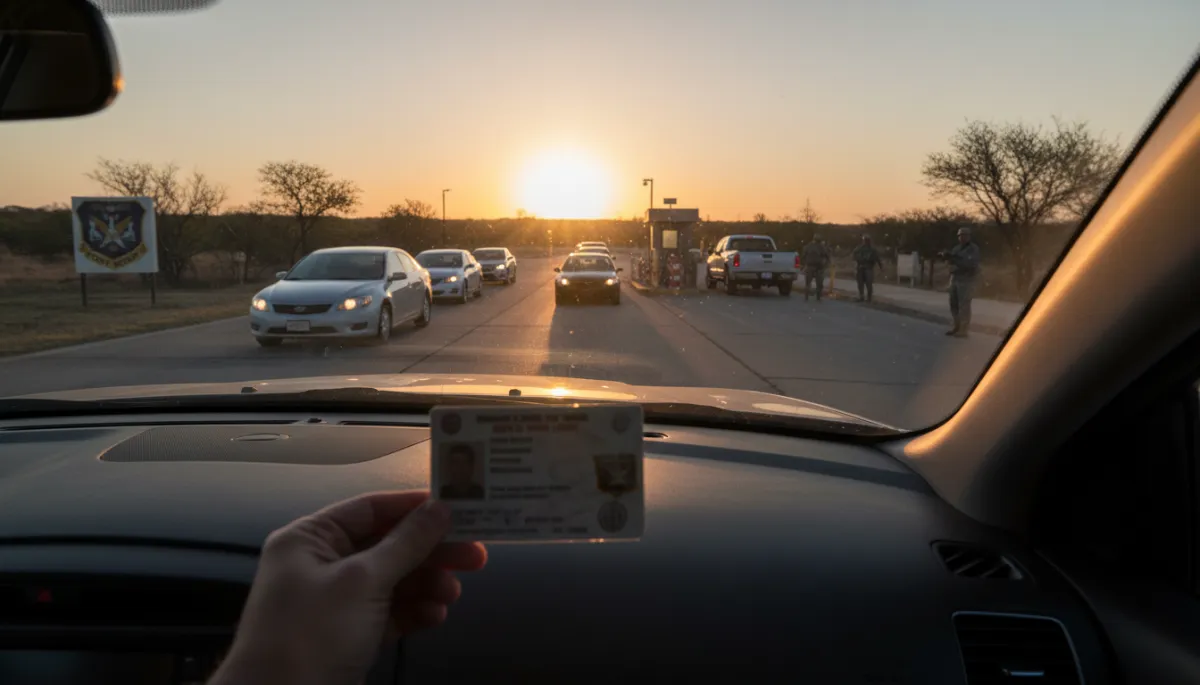
Knowing which gate to use and when can save you hours every month.
Gates and Best Commute Times
Fort Hood is big. Like, “you’ll get lost the first few times” big. Which gate you use can make or break your daily routine, especially if you’re coming from Harker Heights, Copperas Cove, or Temple. Gate hours and traffic patterns can shift, so always verify current info with the installation site, but here are general principles:
- Aim to arrive 20–30 minutes earlier than you think you need to during your first couple of weeks. Learn how long it actually takes from your driveway to your unit at normal PT and work call times.
- Keep a “gate backup plan.” If your usual gate is backed up or temporarily closed, know which alternate gate makes the most sense from your side of town—especially if you’re coming from Temple or Belton and already have a longer drive.
Getting Your ID and Access Straight
- Make sure your military ID and DEERS info are updated promptly after arrival—especially if you’ve had changes like marriage, divorce, or new children since your last duty station. Spouses will need updated ID cards as well, and older teens may need their first ID if they’re now eligible.
- If you have extended family or caregivers visiting to help with the move, they’ll need to follow base visitor center procedures. Plan ahead; don’t wait until Grandma is at the gate with a trunk full of toys and no idea what a sponsor is.
Commissary, PX, and MWR: Your New Best Friends
- The commissary at Fort Hood is large and well-stocked, and with grocery prices what they are in 2026, it can be a major budget helper—especially for meat, pantry staples, and bulk items. Combine commissary runs with local grocery sales to really stretch your food budget.
- The PX is great for tax-free big purchases, uniforms, and last-minute “oh no, PT belt” emergencies. Just watch out for the “I went in for socks and left $200 lighter” phenomenon. It’s real, and it’s sneaky.
- MWR (Morale, Welfare, and Recreation) offers gyms, pools, outdoor rec rentals, tickets, and events that can save you a ton on family fun. Before you pay full price for a local attraction, check if MWR sells discounted tickets or has special events planned.
Section 7 – Spouse and Family Resources: You Don’t Have to Do This Alone

Finding your people early turns a hard PCS into a manageable one.
Military Spouse Employment and MyCAA
Fort Hood’s location near Killeen, Temple, and Belton means there are real job options for spouses—on post, in local schools, healthcare, retail, and remote work. If you’re eligible, MyCAA (My Career Advancement Account) can help fund certifications and training that travel with you: medical billing, teaching assistants, IT support, and more. Pair that with the local job market and you’ve got a solid path to portable income.
EFMP, Childcare, and Schools
- If you’re enrolled in the Exceptional Family Member Program (EFMP), connect with the EFMP office early. They can help coordinate medical and educational services, advocate with schools, and point you toward specialists in the area. Don’t wait until there’s a crisis to introduce yourself.
- For childcare, look into Child Development Centers (CDCs) on post, Family Child Care homes, and off-post daycares and preschools. Waitlists can be long, especially for infant and toddler rooms, so get on multiple lists if you can and update your status regularly.
- When it comes to schools, remember that ratings only tell part of the story. Talk to other parents in your specific neighborhood, join local Facebook groups, and, if possible, visit campuses. Teachers and principals change; current parent feedback is gold.
Facebook Groups and Local Support Networks
Love them or hate them, Facebook groups are where a lot of real-time intel lives. Search for:
- Fort Hood or Fort Cavazos spouse groups
- Neighborhood-specific groups (e.g., “Harker Heights Moms,” “Copperas Cove Families”)
- Buy/sell/trade groups for cheap furniture and kid gear to bridge the gap until your HHG arrives
Fort Hood PCS FAQ: Real Questions, Straight Answers
Is Fort Hood really affordable compared to other duty stations?
Yes. With Fort Hood BAH rates for 2026 and a cost of living about 16% below the national average, many families find they can either save money or afford more space than at previous posts—especially if they choose neighborhoods like Killeen or Copperas Cove and keep rent below 80% of BAH.
What are the best neighborhoods near Fort Hood for families?
“Best” depends on your priorities, but commonly recommended areas (based on 2026 real estate and community data) include:
- Harker Heights – Great balance of commute, schools, and newer homes.
- Copperas Cove – More rural feel and affordable, with solid schools.
- Belton and Nolanville – Strong Belton ISD schools and good resale potential, with higher price tags.
Killeen proper can also be great if you choose your specific subdivision carefully and prioritize commute and cost.
How far in advance should I plan temporary housing for a Fort Hood PCS?
As soon as you have orders. Aim to secure at least 2–3 weeks of temporary housing, especially during peak PCS season. On-post TLF fills quickly, and furnished rentals like Steel Toe Suites or other corporate housing options can book out for summer months. It’s much easier to shorten a stay than to scramble for a room with two kids, a dog, and three suitcases at midnight.
Is it worth buying a house near Fort Hood?
It can be—but only if it fits your bigger financial plan. The Fort Hood area has strong rental demand due to constant PCS cycles, and neighborhoods like Harker Heights, Belton, and Nolanville often have better long-term resale potential. If you know you’ll be here at least 3–5 years, are comfortable with the mortgage, and can handle the risk of becoming a long-distance landlord later, buying can be a smart move. If your orders are short, your job is unstable, or your emergency fund is thin, renting is often the wiser choice.
How do I find good local intel without getting overwhelmed?
Combine three sources: official info (installation pages, Housing Services Office, TRICARE), trusted local guides like The Killeen Insider, and a few well-moderated Facebook groups or spouse networks. Ask very specific questions (“Commute from this neighborhood to this gate at 0600?”) instead of open-ended ones (“Is Killeen safe?”). Specific questions get better answers and less drama.
You Don’t Have to White-Knuckle This PCS: Join The Killeen Insider Community
If you’ve read this far, you’re already doing more than most people to set your family up well for this move. You’re not just surviving another PCS—you’re trying to be intentional about your money, your time, and your sanity. That deserves some serious respect.

The goal isn’t a perfect PCS; it’s a soft landing for the people you love.
The truth is, Fort Hood can be a really good duty station when you have the right intel: neighborhoods that fit your family, a plan to stretch your BAH, realistic expectations for temporary housing, and a list of resources you can lean on instead of trying to muscle through alone.
That’s exactly why we created The Killeen Insider—to give you ongoing, real-world updates that go beyond what you hear in briefings or from that one Facebook comment thread that went off the rails. From new neighborhood developments and school changes to updated Fort Hood BAH rates, local job leads, and honest reviews of everything from playgrounds to plumbers, we share what we’d want to know if we were PCSing here again.
Resources
Relocating to Fort Hood? Mobilized Soldiers is your go-to resource for military PCS moves and relocation support. Need furnished temporary housing while you get settled? Steel Toe Suites offers comfortable short-term stays right in the Fort Hood corridor.
