Fort Hood vs. Fort Cavazos: Killeen's Identity Battle
Local Legends, Community Intelligence, Fort Hood Fort Cavazos Name Change
Fort Hood or Fort Cavazos? The Name War That Defines Killeen's Identity — And Why It Matters
A deep, boots-on-the-ground look at how one Killeen Texas military base name — Fort Hood or Fort Cavazos — became a fault line, a mirror, and a test of who we are as a community.
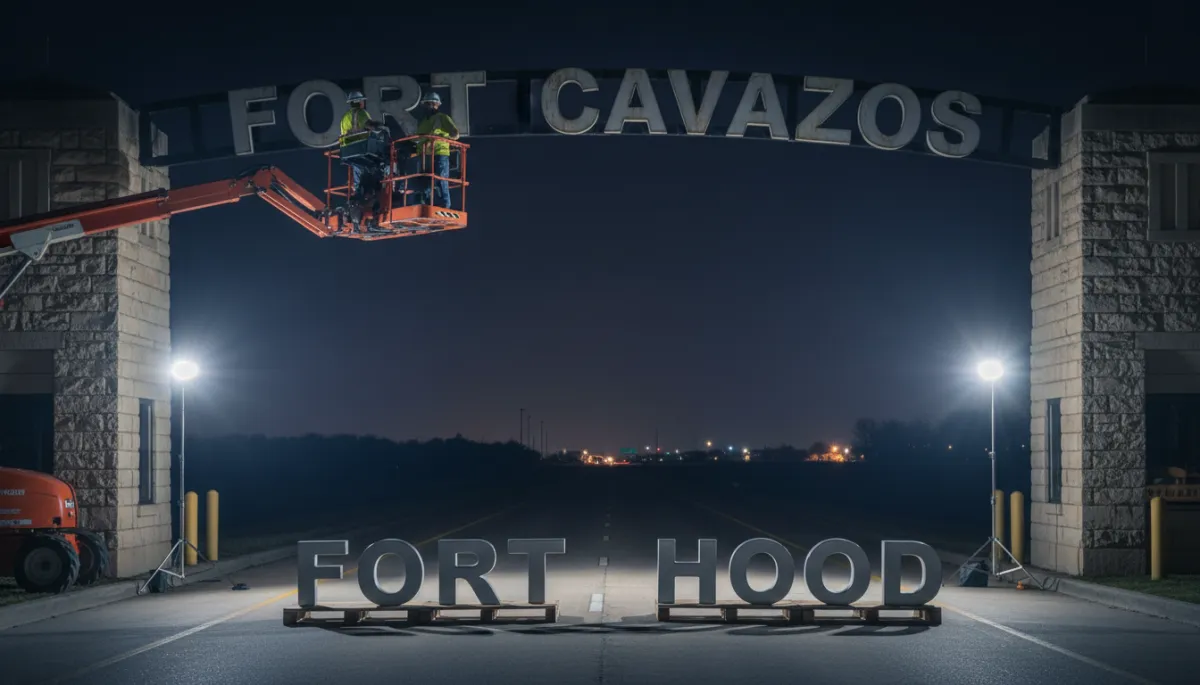
Table of Contents
- Cinematic Opening: The Night the Sign Changed Back
- Chapter 1 — Who Was John Bell Hood?
- Chapter 2 — The Rename to Fort Cavazos (2023)
- Chapter 3 — The Reversal (2025): Fort Cavazos Back to Fort Hood
- Chapter 4 — What Killeen Residents Actually Think in 2026
- Chapter 5 — What This Means for Killeen’s Identity
- Chapter 6 — General Cavazos’s Legacy: A Local Legend Either Way
- Interactive Poll — “What Do YOU Call It?”
- Historical Timeline: From Fort Hood to Fort Cavazos and Back
- Comparison Table: Hood vs. Cavazos — Names, Stories, Symbols
- FAQ — 7 Questions Killeen Is Still Asking
- Closing Reflection — One Community, Many Names, Shared Future
The Night the Sign Changed Back
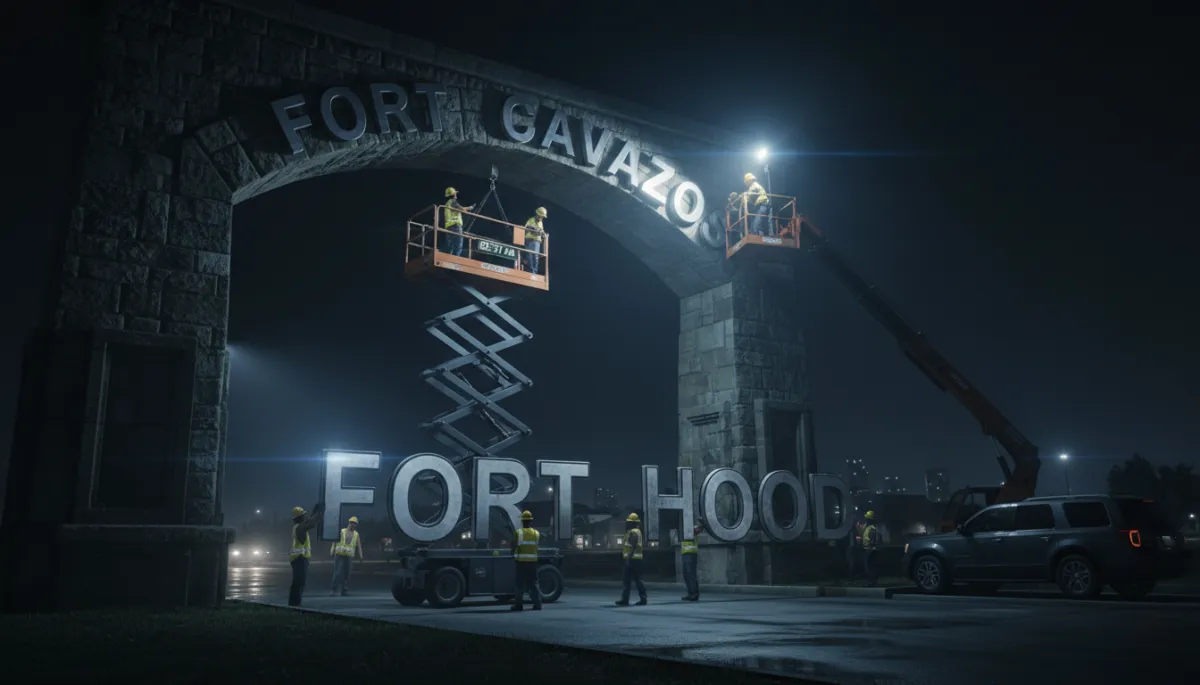
It happened after midnight, in that strange, in-between hour when most of Killeen is finally quiet. A convoy of white utility trucks rolled up to the main gate of the Killeen Texas military base, floodlights snapping on with a cold, electric hum. A cherry picker rose slowly into the warm Central Texas night. Up there, silhouetted against the sky, workers in reflective vests began unbolting each tall metal letter: F. O. R. T. C. A. V. A. Z. O. S.
No speeches. No band. No color guard. Just the clank of metal, the whir of power tools, and the occasional rumble of an 18-wheeler on Highway 190. On the grass nearby, a different set of letters waited on wooden pallets, wrapped in plastic, almost bashful under the work lights: FORT HOOD. The name that had been here for more than 80 years. The name that had been taken down in 2023. The name that was now coming back — again — this time, officially, to honor World War I hero Colonel Robert B. Hood, not Confederate General John Bell Hood, according to Army statements and reporting from army.mil.
By dawn, the trucks were gone. The dust had settled. Commuters heading to PT glanced up and did a double take. Kids on the school bus stared at the gate, confused. Some residents shrugged — “It’ll always be Hood to me.” Others felt a gut punch as they realized the word Cavazos had vanished from the front door of the installation that powers Killeen’s economy and identity. For them, this wasn’t just a sign swap. It felt like a story being rewritten while the town slept.
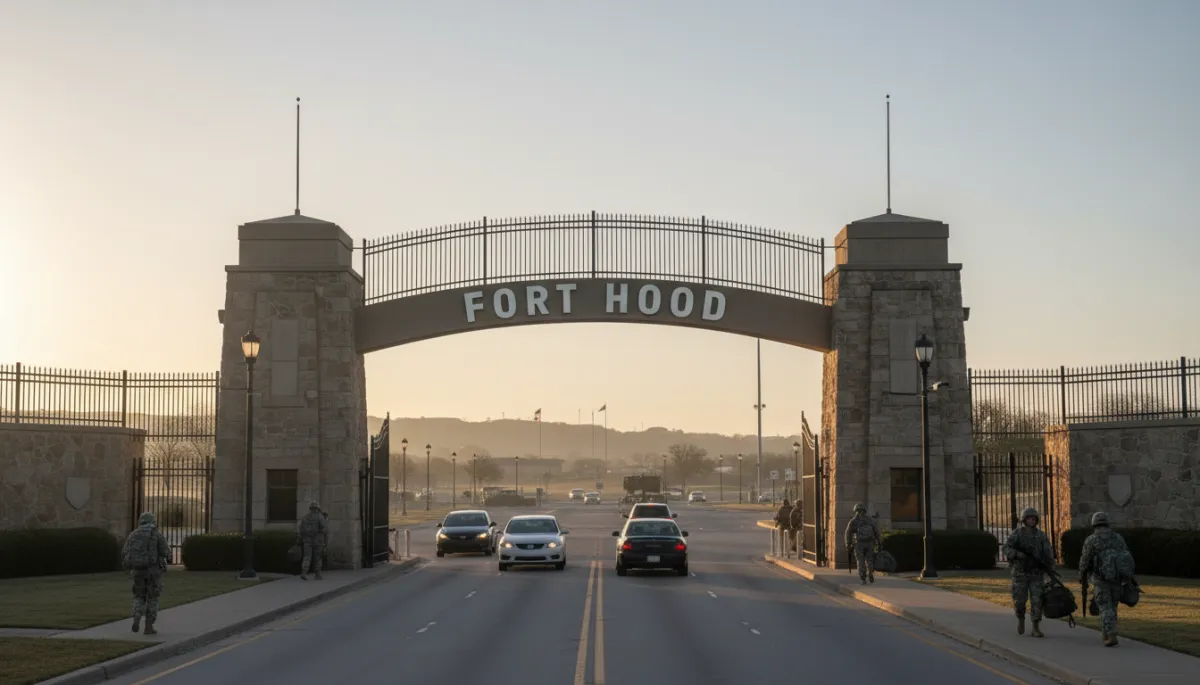
Killeen woke up to a familiar name and a very different argument.
Chapter 1 — Who Was John Bell Hood?
To understand why the Fort Hood Fort Cavazos name change became such a flashpoint, we have to rewind to 1942 — and even further back, to the Civil War. When the Army opened a new tank destroyer training center near Killeen during World War II, it needed a name. The choice: Fort Hood, honoring Confederate General John Bell Hood, a Texas-connected commander who fought for the Confederacy in some of the war’s bloodiest battles.
Hood was born in Kentucky in 1831, but he made his name in Texas and the Western frontier before the Civil War. As a U.S. Army officer, he served in the 2nd U.S. Cavalry, riding under future Civil War giants like Robert E. Lee. When the war broke out, he resigned his U.S. commission and joined the Confederate Army, eventually leading the famed “Hood’s Texas Brigade.” His troops were known for ferocity and heavy casualties at battles like Antietam and Gettysburg. Later, he commanded the Army of Tennessee in a series of disastrous campaigns that left his forces shattered and his reputation contested among historians.
For decades, few outside academic circles questioned the name. Soldiers rotated through “The Great Place,” retired here, opened businesses, raised families. The name Fort Hood became shorthand for deployments to Iraq and Afghanistan, for tank convoys on Range Road, for late-night Whataburger runs and payday traffic on Clear Creek. For many, “Hood” meant service, sacrifice, and a particular kind of gritty Army life — not the Confederacy.
But as the nation’s conversation about race, memory, and public symbols sharpened in the 2010s and 2020s, the fact that one of the largest U.S. Army posts still honored a Confederate general became impossible to ignore. In 2021, Congress created the Naming Commission to review and recommend changes to bases named after Confederate figures. Fort Hood was squarely in the crosshairs (Axios; army.mil).
Chapter 2 — The Rename to Fort Cavazos (2023)
The Naming Commission’s mandate was straightforward on paper: remove Confederate commemorations from military assets and replace them with names that better reflect the full story of America’s armed forces. In practice, it meant asking a hard question: If we were naming this base today, who would it honor? For Killeen’s sprawling installation, the answer in 2023 was General Richard Edward Cavazos.
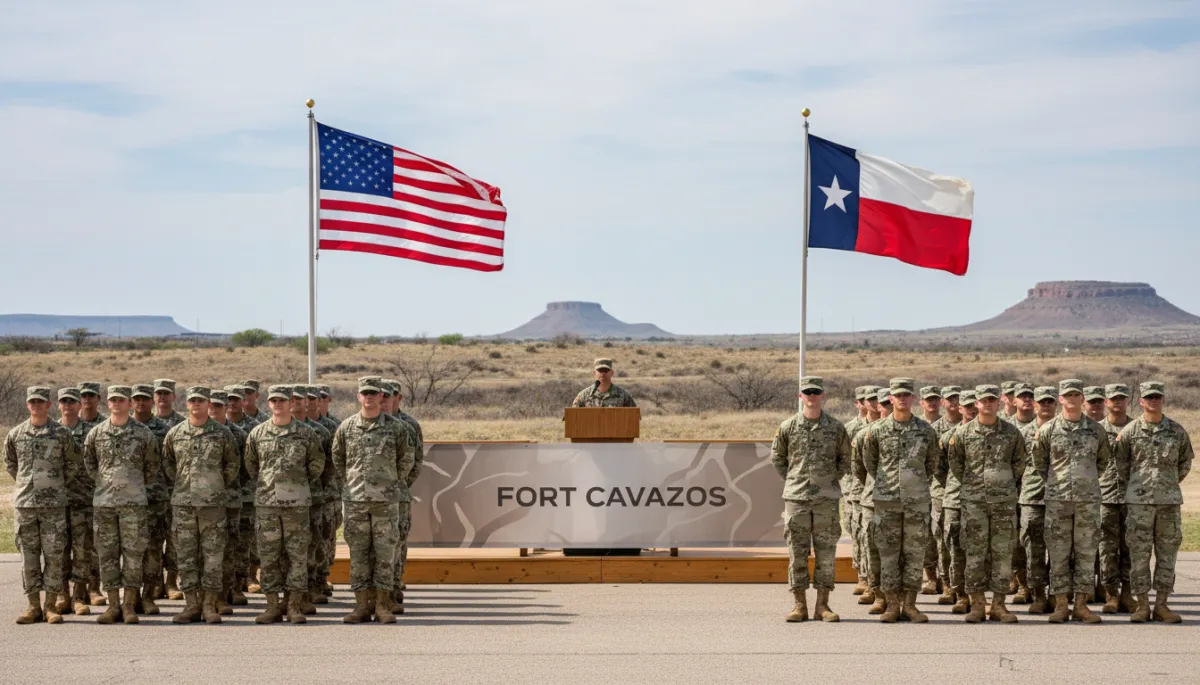
In 2023, Fort Hood renamed to Fort Cavazos to honor a Texas-born Army legend.
Who Was General Richard E. Cavazos?
Born in Kingsville, Texas, in 1929, Richard Edward Cavazos was the son of Mexican American parents and a product of South Texas ranch country. He graduated from Texas Tech and was commissioned into the Army, eventually serving with distinction in both Korea and Vietnam. On the battlefield, he was the kind of leader soldiers tell stories about for decades — the one who went forward when everyone else was told to stay back.
Cavazos earned the Distinguished Service Cross twice, along with a Silver Star and other decorations, for repeatedly exposing himself to enemy fire to reorganize shattered units and evacuate wounded soldiers. He rose through the ranks to become the first Hispanic four-star general in U.S. Army history. Later, he commanded III Corps and the very installation that would one day carry his name. His family’s story didn’t stop with him: his brother, Lauro Cavazos, became the first Hispanic cabinet secretary, serving as Secretary of Education under Presidents Reagan and George H.W. Bush.
From Fort Hood to Fort Cavazos: May 9, 2023
On May 9, 2023, the Army officially redesignated Fort Hood as Fort Cavazos in a ceremony that drew local leaders, veterans, and national media (Axios; home.army.mil). New signage went up. Websites changed. Businesses from car dealerships to barber shops started adding “Fort Cavazos” to their marketing copy. For many in Killeen’s Hispanic community, it was a powerful symbol: a Texas-born Latino general, a decorated combat hero, finally recognized at the highest level, and right here in Central Texas.
As a senior software engineer living in this community, I watched local organizations scramble to update everything from mobile apps to printed brochures. In code, it looked something like this:
const oldName = "Fort Hood";
const newName = "Fort Cavazos";

function updateBaseName(text) {
  if (!text) {
    return text;
  }

  return text.replaceAll(oldName, newName);
}

const businessCard = "Proudly serving soldiers and families at Fort Hood.";
const updatedCard = updateBaseName(businessCard);

console.log(updatedCard);
// Output: "Proudly serving soldiers and families at Fort Cavazos."
Multiply that simple transformation across thousands of documents, websites, and systems, and you start to see why local businesses and institutions felt the rename in their wallets as much as in their hearts.
Chapter 3 — The Reversal (2025): Fort Cavazos Back to Fort Hood
Then came the second plot twist. In 2025, following a presidential directive, the Department of Defense received orders to revert several Army post names. For Killeen, that meant undoing the Fort Hood renamed Fort Cavazos decision and bringing back the Hood name — but with a legal and symbolic twist. The Army announced the base would again be called Fort Hood, this time officially honoring Colonel Robert Benjamin Hood, a World War I hero and Distinguished Service Cross recipient, not Confederate General John Bell Hood (army.mil).
The Orders and the Ceremony
On June 11, 2025, the Secretary of the Army signed the order to revert the name. On July 28, 2025, III Armored Corps hosted a formal renaming ceremony, casing the Fort Cavazos colors and unfurling the Fort Hood colors once more (army.mil; Stars and Stripes). Officially, the installation is now Fort Hood again, honoring Col. Robert B. Hood. Unofficially, for many residents, it still carries the emotional baggage of its original namesake and the recent Cavazos chapter.
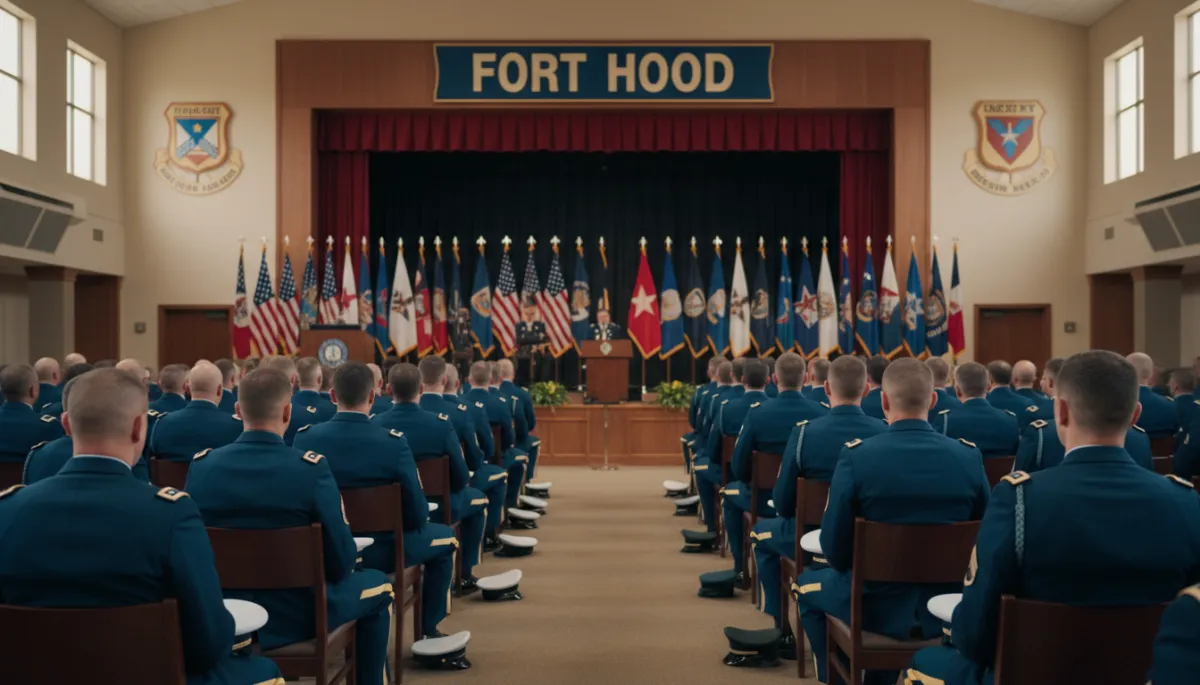
The 2025 ceremony restored the Fort Hood name with a new official honoree.
The Quiet, Late-Night Sign Swap
So why did the sign change at night, seemingly without fanfare? Partly logistics — you don’t want to block the main gate during morning rush. Partly symbolism — the big public ceremony had already happened on post; the physical signage was just catching up. But for people in Killeen, that quiet swap became its own kind of ceremony, one that felt more like a software rollback than a celebration: a production system reverting to a previous version after a controversial patch.
const baseNames = ["Fort Hood", "Fort Cavazos"];
let currentNameIndex = 1; // 0 = Hood, 1 = Cavazos

function revertBaseName() {
  currentNameIndex = 0;
  console.log(`Base name reverted to ${baseNames[currentNameIndex]}.`);
}

revertBaseName();
// Output: "Base name reverted to Fort Hood."
For residents, it wasn’t a log line in a console — it was waking up to a different sign, a different story, and a fresh round of arguments on social media, at H-E-B, and in church parking lots.
Chapter 4 — What Killeen Residents Actually Think in 2026
By mid-2026, with the official name set back to Fort Hood and congressional efforts underway to potentially restore the Fort Cavazos designation again (Military Times), Killeen isn’t speaking with one voice. It’s more like a patchwork of perspectives, each shaped by history, identity, and how many times you’ve had to reprint business cards in the last three years.
1. Long-Timers Relieved: “We Got Something Back”
Many long-time residents and veterans who served here when it was Fort Hood feel a sense of relief. Local coverage captured veterans saying the reversion felt like “getting something back,” a restoration of the name they bled under (KWTX). For them, “Fort Hood” is less about John Bell Hood and more about their own memories: motor pools, deployments, memorials for fallen friends. Changing the name felt like someone had edited the caption under their life’s photo album.
2. Those Who Valued Cavazos: Mourning an Erasure
On the other side, many in the Hispanic community — especially Latino veterans — saw the Fort Cavazos name as long-overdue recognition. When the name reverted, organizations like LULAC (League of United Latin American Citizens) denounced the move as a “disrespect to all Latinos in the military” and a willful erasure of General Cavazos’s legacy (LULAC). For them, this wasn’t just semantics — it was about whose stories we choose to carve into stone and whose we quietly sand away.
For many Latino residents, the Cavazos name felt like long-awaited representation.
3. The Tired Middle: “Just Pick a Name and Stick to It”
A significant chunk of Killeen — including plenty of military families — is simply exhausted. As one local business owner told a reporter, the name changes feel “not that big of a deal” in daily life, but the repeated rebranding is a headache (KXXV). They’ve updated websites, menus, signs, and maps twice already. Now, with Congress flirting with flipping it back to Fort Cavazos again, some are joking that they’ll just start calling it “The Base” and let the politicians argue over the label.
4. Businesses and the Double Rebrand
For local businesses, the name war has a line item in QuickBooks. First, they paid to swap “Fort Hood” for “Fort Cavazos” on everything from websites to billboards. Then they had to swap back. One veteran highlighted the costs of changing menus, signs, and promotional materials twice in just a few years (KXXV). From a developer’s perspective, even something as simple as updating a city directory or local app isn’t trivial when you’re doing it over and over.
function migrateBaseName(records, fromName, toName) {
  return records.map((record) => {
    if (!record.description) {
      return record;
    }

    return {
      ...record,
      description: record.description.replaceAll(fromName, toName),
    };
  });
}

const businesses = [
  { name: "Hood Barbershop", description: "Serving Fort Hood soldiers since 1995." },
  { name: "Cavazos Auto", description: "Right outside Fort Cavazos main gate." },
];

const reverted = migrateBaseName(businesses, "Fort Cavazos", "Fort Hood");
console.log(reverted);
That little script is the clean version. Real life is messier: invoices, legal documents, email signatures, social media bios, Google Maps, and more — all chasing whichever name is currently in vogue in Washington, D.C.
5. City Leaders: Preserving Cavazos in Other Ways
City officials have tried to thread the needle. On April 21, 2026, Killeen’s Park and Recreation Advisory Board voted to rename the Fort Cavazos Regional Trail as the General Cavazos Trail, specifically to preserve his legacy regardless of what happens with the base name (City of Killeen). It’s a quiet but meaningful move: a way of saying, “Even if the sign at the gate changes, this community remembers who he was.”
Chapter 5 — What This Means for Killeen’s Identity
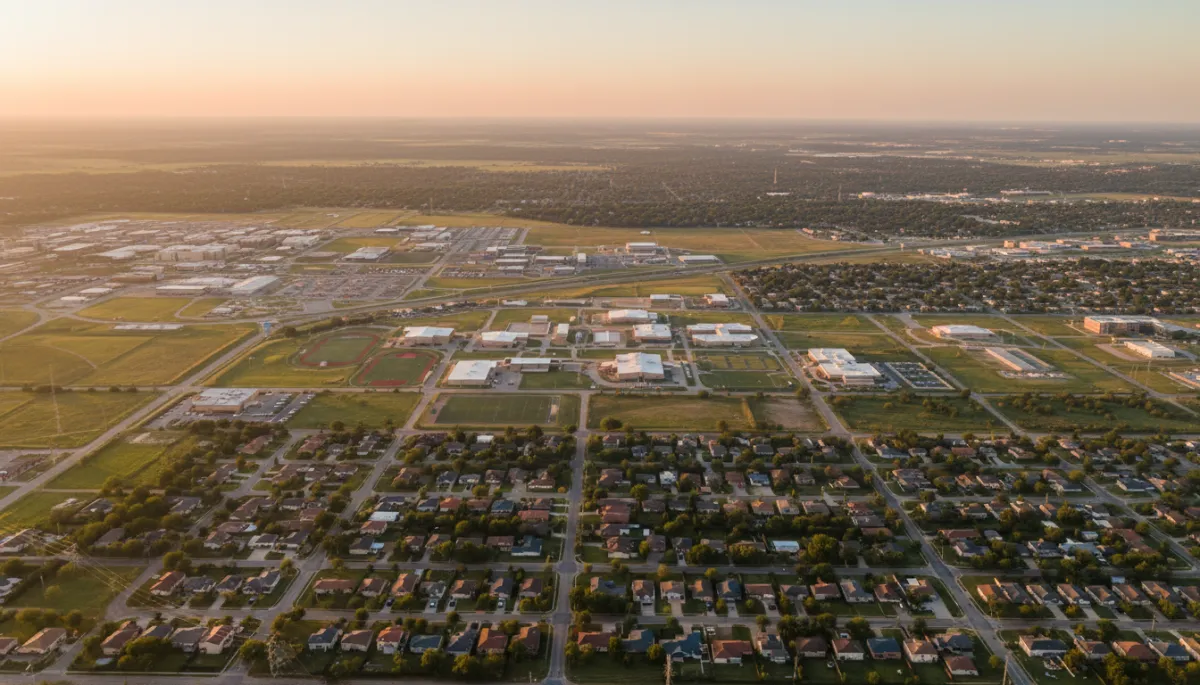
Killeen’s identity stretches far beyond the gate and whatever name hangs above it.
Strip away the politics for a moment, and the question under all this is simple and profound: Who are we, really? Is Killeen defined by whether the sign reads Fort Hood or Fort Cavazos, or is the name war just a loud argument on the surface of something deeper — the story of a city that grew up in the shadow of a massive Army post and is now trying to become more than just a “base town”?
Beyond the Name: People, Culture, and Resilience
Over the past few years, Killeen has been investing in downtown revitalization, public safety, and neighborhood growth. Articles highlighting the city’s efforts point to new businesses, infrastructure upgrades, and a growing sense that Killeen is more than just the Killeen Texas military base name (PR Newswire). Residents care about roads, schools, crime rates, and jobs more than which historical figure the base is tied to — even as that symbol still matters, especially to those who feel seen or unseen by it.
A Community That Knows How to Adapt
If there’s one thing military communities understand, it’s change. PCS orders. Deployments. New commanders every few years. For decades, Killeen has adapted to new missions, new wars, and new waves of soldiers from every corner of the country. In a way, the Fort Cavazos back to Fort Hood saga is just another version bump in a long-running system — frustrating, noisy, but survivable because the underlying architecture is resilient: people who show up, help their neighbors, and figure it out together.
class CommunityIdentity {
  constructor(coreValues) {
    this.coreValues = coreValues;
    this.baseName = "Fort Hood";
  }

  updateBaseName(newName) {
    this.baseName = newName;
  }

  describe() {
    return `We are a community built on ${this.coreValues.join(", ")}, `
      + `living next to ${this.baseName}.`;
  }
}

const killeen = new CommunityIdentity(["service", "resilience", "diversity"]);
killeen.updateBaseName("Fort Cavazos");
console.log(killeen.describe());
// "We are a community built on service, resilience, diversity, living next to Fort Cavazos."

killeen.updateBaseName("Fort Hood");
console.log(killeen.describe());
// Same core values, different label on the gate.
The code is tongue-in-cheek, but the point is serious: the core values don’t change just because the sign does. The real question for Killeen isn’t which name “wins,” but how we make sure every kid in this city — Black, white, Latino, Asian, Native, military, civilian — can see a future for themselves here, no matter what Congress or the Pentagon decides to print on the letterhead.
Chapter 6 — General Cavazos’s Legacy: A Local Legend Either Way
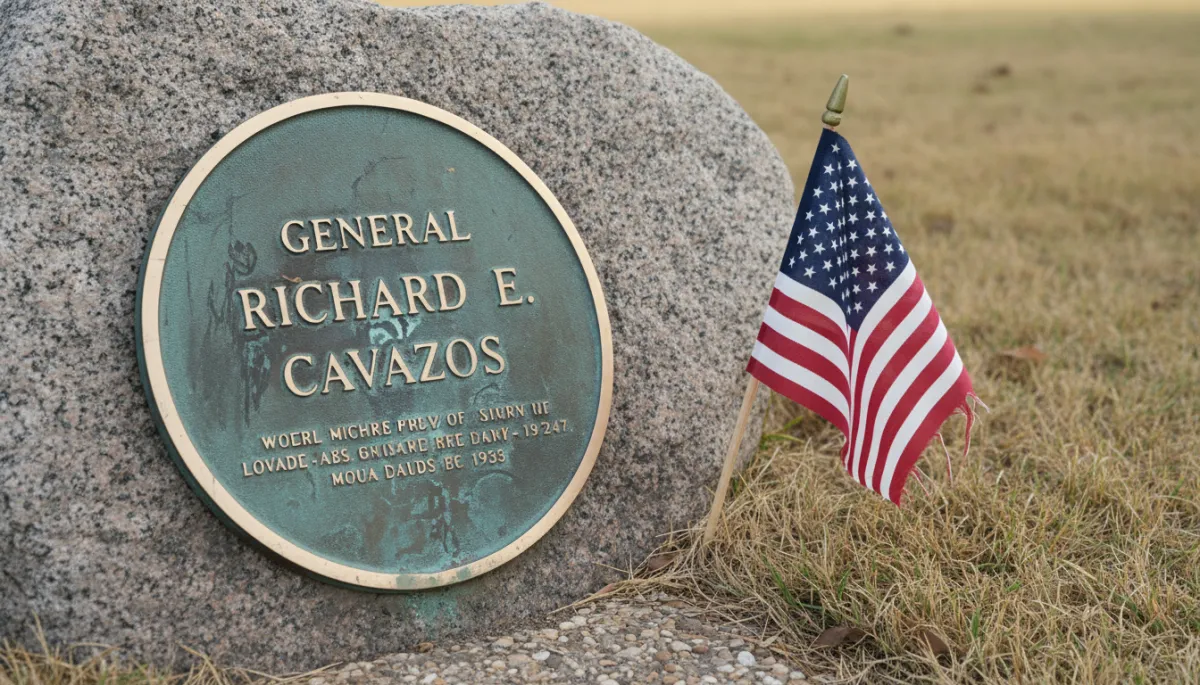
Even without the base name, Killeen is finding ways to keep Cavazos’s story alive.
Here’s the truth that cuts through the noise: regardless of what the base is called this year or next, General Richard E. Cavazos is a Texas hero whose story deserves to be told — especially in Killeen. He led soldiers in combat, broke barriers at the highest levels of the Army, and embodied a kind of courage that transcends politics. His legacy doesn’t vanish because a sign came down in the middle of the night.
Local Legends, Local Responsibility
The decision to rename the Fort Cavazos Regional Trail as General Cavazos Trail is a powerful example of local agency (City of Killeen records). It says: “We can’t control every decision made in D.C., but we can control what and whom we honor in our own backyard.” Imagine that trail as more than a walking path — as a living classroom, with plaques, QR codes, and stories about Cavazos’s life, his family, and the soldiers he led. That’s the kind of community intelligence that turns a name into a legend.
Whether you supported the Fort Hood renamed Fort Cavazos move or cheered when it became Fort Hood again, there’s room to agree on this: kids in Killeen should know who General Cavazos was, what he did, and how his life expands the story of what a Texas hero can look like.
Interactive Poll — What Do YOU Call It?
Around kitchen tables and in code comments, I’ve heard every version: “It’s Fort Hood and always will be.”“I still call it Fort Cavazos out of respect.”“Honestly, it’s just home.” So let’s put some data behind the anecdotes.
If you’re running a local news site, community Facebook group, or city-backed app, you can wire up a simple poll like this in your backend. In pseudo-code, it might look something like:
const options = ["Fort Hood", "Fort Cavazos", "It doesn't matter, it's home"];
const votes = {
  "Fort Hood": 0,
  "Fort Cavazos": 0,
  "It doesn't matter, it's home": 0,
};

function castVote(choice) {
  if (!options.includes(choice)) {
    throw new Error("Invalid option");
  }

  votes[choice] += 1;
}

function getResults() {
  const total = Object.values(votes).reduce((sum, count) => sum + count, 0);

  return Object.entries(votes).map(([label, count]) => ({
    label,
    count,
    percentage: total === 0 ? 0 : Math.round((count / total) * 100),
  }));
}
The real value isn’t the exact percentages — it’s giving people a chance to be counted, to say, “This is how I see my home,” and then using that data to inform how we talk about ourselves, from city branding to classroom lessons.
Historical Timeline — From Fort Hood to Fort Cavazos and Back
| Date | Event | Notes |
|---|---|---|
| 1942 | Fort Hood established | Named for Confederate Gen. John Bell Hood during WWII expansion. |
| 2021 | Naming Commission formed | Congress orders review of Confederate-linked military names. |
| May 9, 2023 | Fort Hood → Fort Cavazos | Base renamed for Gen. Richard E. Cavazos, first Hispanic four-star general (Axios). |
| June 11, 2025 | Order to revert to Fort Hood | Secretary of the Army signs order; new honoree is Col. Robert B. Hood (army.mil). |
| July 28, 2025 | Formal renaming ceremony | Colors cased for Fort Cavazos, unfurled for Fort Hood again (army.mil). |
| April 21, 2026 | General Cavazos Trail named | Killeen renames local trail to honor Cavazos regardless of base name. |
| June 5–23, 2026 | Congressional moves to restore Fort Cavazos | House panel and Senate language propose renaming Fort Hood back to Fort Cavazos (Military Times; govinfo.gov). |
| July 31, 2026 | Current status | Official name remains Fort Hood (honoring Col. Robert B. Hood); potential future change pending. |
Comparison Table — Hood vs. Cavazos: Names, Stories, Symbols
| Aspect | Fort Hood (John Bell / Robert B.) | Fort Cavazos (Richard E. Cavazos) |
|---|---|---|
| Original association (1942–2023) | Confederate Gen. John Bell Hood, Texas Brigade commander in Civil War. | N/A — name not yet in use. |
| 2023–2025 honoree | Name retired during this period. | Gen. Richard E. Cavazos, first Hispanic four-star general, Korean and Vietnam War hero. |
| Current official honoree (2025–) | Col. Robert B. Hood, World War I hero and Distinguished Service Cross recipient (army.mil). | Not currently in use as installation name (as of July 2026); legacy preserved locally. |
| Symbolism for many veterans | Nostalgia, deployments, shared hardship; sometimes separated from Confederate roots. | Representation, inclusion, and acknowledgment of Latino service and sacrifice. |
| Political fault lines | Seen by some as resisting “woke” changes; by others as clinging to problematic history. | Seen by some as overdue justice; by others as unnecessary political correctness. |
FAQ — 7 Questions Killeen Is Still Asking
1. Is it officially Fort Hood or Fort Cavazos right now?
As of July 31, 2026, the official name is Fort Hood, honoring Col. Robert B. Hood, a World War I hero. The reversion was ordered in June 2025 and formally marked by a ceremony on July 28, 2025 (army.mil). Legislative efforts to restore the Fort Cavazos name are ongoing but not yet enacted.
2. Was the base ever officially named after John Bell Hood again?
No. The original 1942 designation honored Confederate General John Bell Hood. After the 2025 reversion, the Army explicitly stated the new honoree is Col. Robert B. Hood, not John Bell Hood. The name is the same; the official namesake is different.
3. Why did they pick General Cavazos in the first place?
The Naming Commission looked for figures who reflected the Army’s diversity and valor. General Richard E. Cavazos was a highly decorated Texas-born officer, the first Hispanic four-star general, and a former commander of the installation itself. His record in Korea and Vietnam, plus his family’s broader contributions to public service, made him a compelling choice (Axios).
4. Why do some people oppose the Fort Cavazos name?
Reasons vary. Some oppose any name change on principle, seeing it as erasing history or giving in to political pressure. Others feel emotionally attached to “Fort Hood” because that’s where they served, regardless of the Confederate origins. A few simply resent the cost and disruption of repeated rebranding. It’s a mix of symbolism, identity, and practicality — not a single, simple reason.
5. Why do others insist on using Fort Cavazos even now?
For many Latino residents and veterans, “Fort Cavazos” represents long-overdue recognition of Hispanic service. Using that name is a way to honor General Cavazos and push back against what they see as an erasure of his legacy. Organizations like LULAC have been vocal that they will continue to advocate for the Fort Cavazos name (LULAC).
6. Does the name change affect benefits, pay, or base operations?
Day-to-day, no. Soldiers still get paid. PCS orders still arrive. Units still train and deploy. The impacts are mostly symbolic and administrative: signage, websites, legal documents, and local branding. But symbols matter — especially when they touch on race, history, and representation — which is why the debate is so intense even though the missions remain the same.
7. What can regular residents actually do about any of this?
More than you might think. You can:
- Share your perspective in community polls, town halls, and letters to representatives.
- Support local projects like the General Cavazos Trail that preserve stories regardless of federal decisions.
- Teach your kids — and yourself — the full history: John Bell Hood, Robert B. Hood, and Richard E. Cavazos.
- Build bridges across the divide: listen to why someone else cares about the name they use.
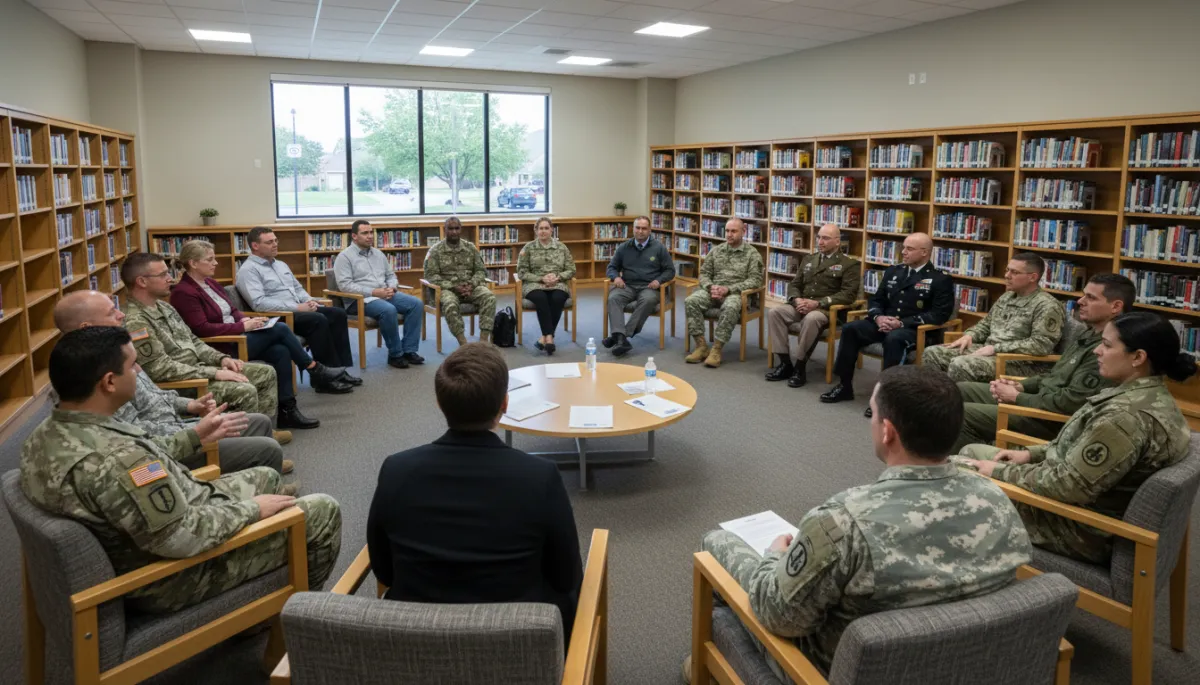
The most important conversations about the base name happen face-to-face, not on cable news.
Closing Reflection — One Community, Many Names, Shared Future
Standing at the main gate today, you see the same tanks on display, the same traffic backing up at 0700, the same Central Texas sky stretching out over a city that has lived through more than its share of change. The letters now read FORT HOOD, but if you listen closely, you’ll hear all three names echoing in conversation: Hood, Cavazos, and home.
As a senior software developer, I’m trained to think in terms of versions, migrations, and rollbacks. But communities aren’t Git repositories. You can’t simply revert to a previous commit and pretend the last few years of debate, hope, anger, and learning never happened. The Fort Hood Fort Cavazos name change — and the Fort Cavazos back to Fort Hood reversal — are now part of Killeen’s source code. They’ve revealed fault lines, yes, but also strengths: a willingness to wrestle with history, to insist on representation, and to keep showing up for each other even when we don’t agree on what to call the gate.
The challenge — and the opportunity — is to make sure our community identity is bigger than any single name. That means honoring the service of those who still say “Hood” with pride, while refusing to let General Cavazos’s legacy fade just because a sign came down in the dark. It means letting our kids learn about all of it: the Confederate general, the World War I hero, the Latino four-star, and the ordinary soldiers and families whose stories give those names meaning.
In the end, the most important question isn’t Fort Hood or Fort Cavazos? It’s: What kind of place do we want Killeen to be, no matter what the sign says? If we can answer that together — across uniforms, languages, and opinions — then this “name war” might turn out to be something else entirely: a turning point where Killeen stopped letting other people define it, and started telling its own story, in its own voice, for the next generation.
Resources
Want to stay connected to the Fort Hood community and get the latest on the base name story? Mobilized Soldiers is the go-to resource for military families navigating life at Fort Hood — from PCS moves to local community intelligence.
